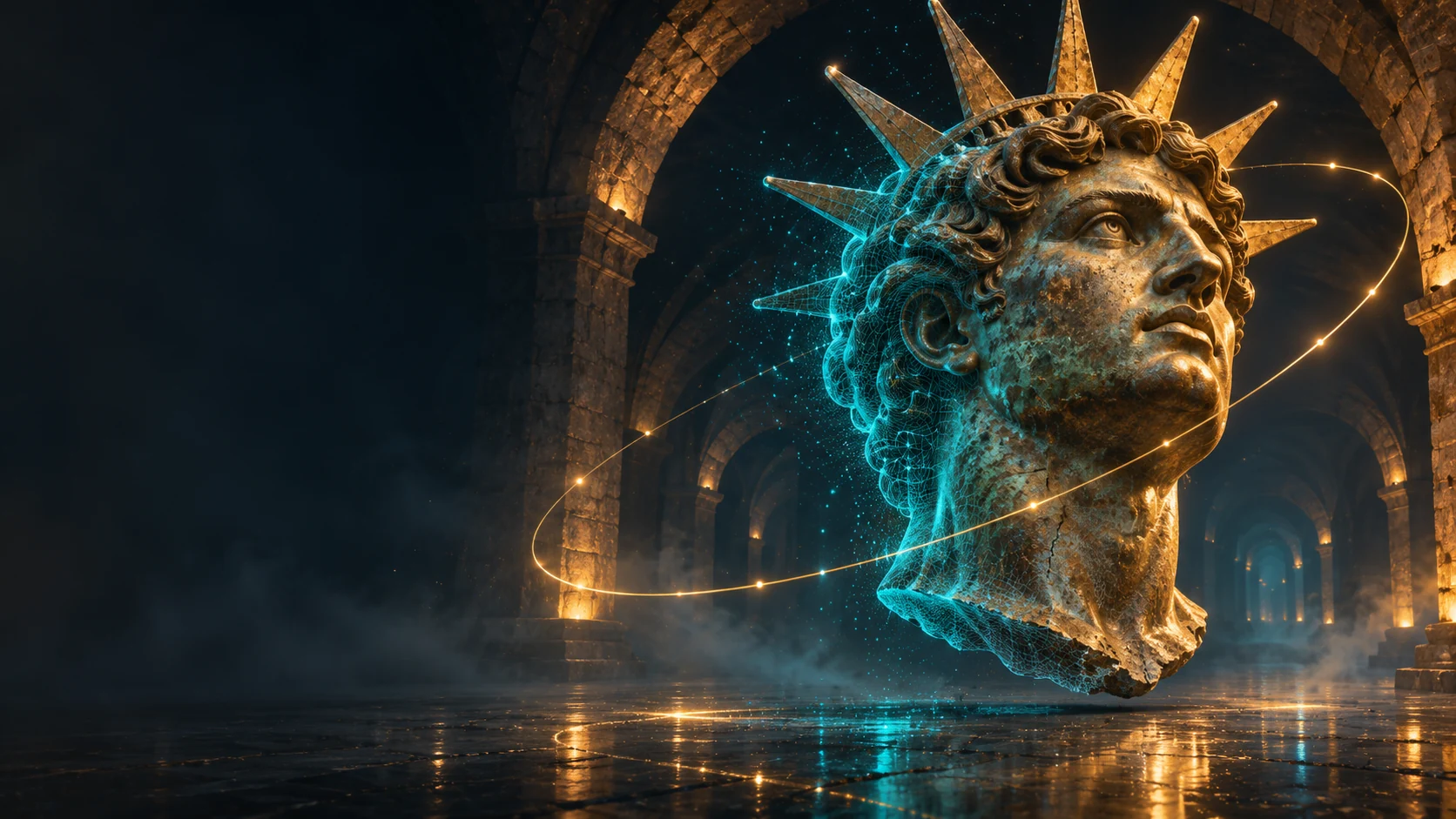
Artefact reconstruction in architectural space

DISCOVER TRIPOLI · LEBANON

A city of many histories.

Architecture, sea routes, trade, craftsmanship and surviving objects — discover the stories behind the installations.

A SHORT HISTORY OF TRIPOLI

More than one era. More than one story.

Tripoli’s history includes ancient Mediterranean networks, centuries of Islamic architecture, trading streets, publishing activity and living craft traditions. No single reconstruction can capture every era.

This page introduces the themes behind Holoseum. Historical material and artistic visualizations are deliberately distinguished.

STONE & ARCHITECTURE

A city written in stone.

Tripoli’s citadel, mosques, khans, hammams and covered souks reveal different layers of the city’s development. Buildings are not simply backdrops: they record how people prayed, traded, learned and lived.

At Holoseum, selected architectural elements are reconstructed in light to help visitors notice details, spaces and relationships that may be difficult to read from stone alone.
SEA & CONNECTIONS

The city and the Mediterranean.

El Mina has connected Tripoli to maritime journeys and exchange for many centuries. Ships, trade goods and travelers linked the port to a larger Mediterranean world.

The exhibition’s maritime stories range from ancient vessels to later harbor craft and historic shipwreck accounts. Some illustrated ships are interpretive reconstructions rather than exact surviving vessels.

MARKETS & MAKERS

History is still being made.

The old souks express a different kind of heritage: one shaped by exchange, crafts and daily movement through the city. Markets and workshops connect the past to the present.

Holoseum pairs digital storytelling with a living handcrafts space, where visitors can encounter materials and traditional skills through the work of local makers.

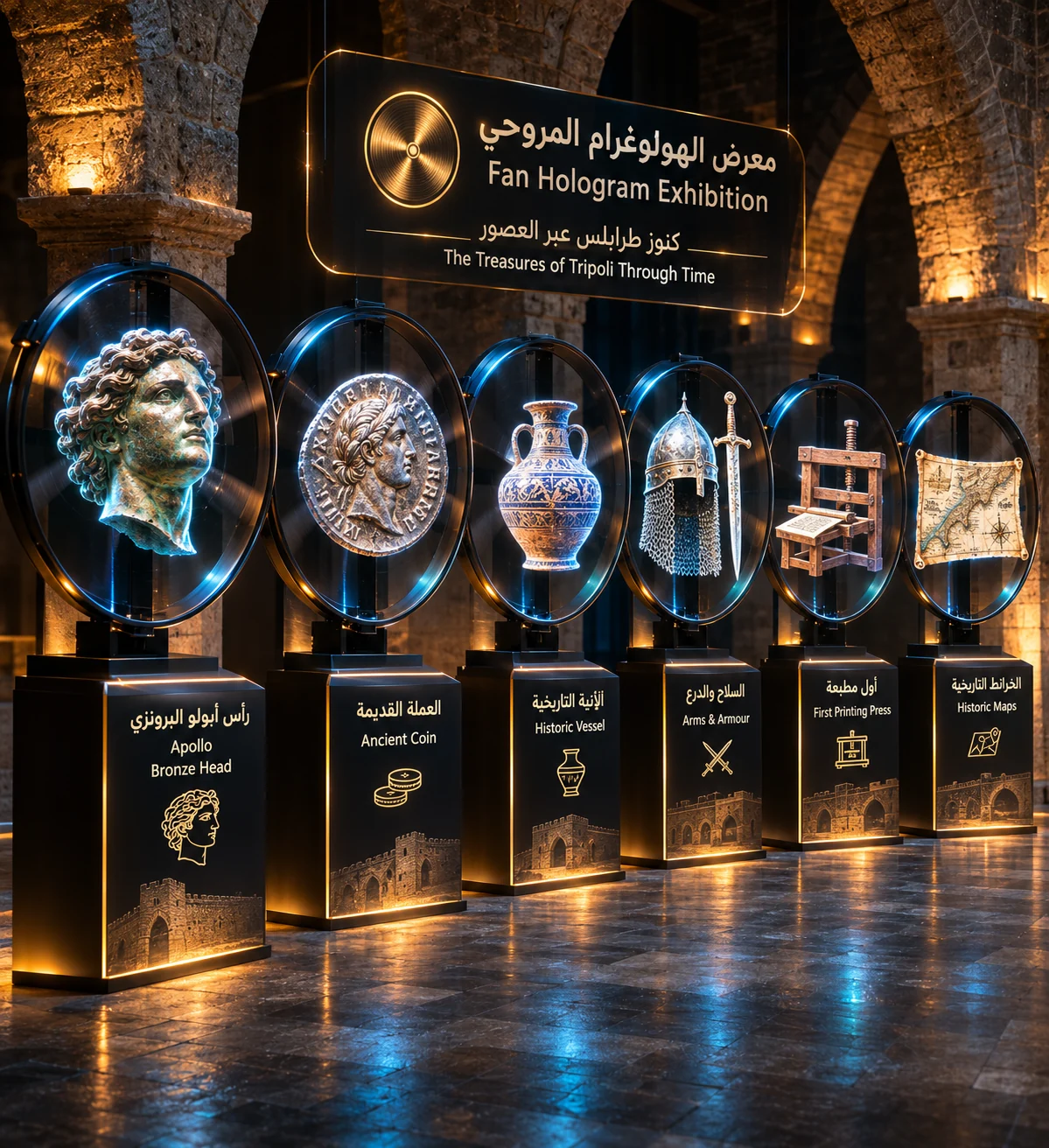
Conceptual display of historical artefacts and digital reconstructions
Objects, inscriptions and stories are fragments of a much wider history.

SURVIVING EVIDENCE

Small objects, large histories.

Coins, seals, inscriptions and bronze objects can tell us about rulers, trade, religion and everyday practices. The exhibition draws attention to objects associated with Tripoli and to the questions historians and archaeologists ask of them.

Examples explored in the exhibition include the bronze radiate head of Apollo, historical coinage and inscriptions. Digital reconstructions make these objects visible in new ways but do not replace the originals.

PRINTING & PUBLISHING

Words changed the city too.

Tripoli’s publishing history includes Al-Balagha Press and the newspaper Tarabulus al-Sham, whose first issue dates to 13 March 1893. Printing helped ideas, learning and public discussion circulate in new forms.

The exhibition introduces the tools and processes of this period. Where an original machine or printed page has not survived or been identified, the presentation treats its reconstruction as illustrative.

HISTORY & RECONSTRUCTION

What is real, and what is imagined?

Holoseum uses holography and digital art to interpret history, not to claim that every detail has been documented. A surviving artefact, a historical reference and an artistic reconstruction are different kinds of evidence.

Our aim is to make the city’s heritage engaging while remaining clear about uncertainty. As you explore the exhibition, look for the distinction between historical sources and visualization.

EXPERIENCE THE STORIES

See how history becomes light.

Explore the six installations that bring these themes to life.

EXPLORE THE EXPERIENCES ↗

BE PART OF THE STORY

Help history reach everyone.

Join Tripoli Holoseum as a sponsor or partner and help keep this cultural experience free and accessible to the public.

WITH THE SUPPORT OF

Safadi FoundationTARABUT programme
European UnionTARABUT programme funding
Siba Zreik FoundationSupporting sponsor
BaytnaSupporting sponsor

The TARABUT programme is funded by the European Union and implemented by Safadi Foundation with AIDA. All event imagery shown is conceptual unless otherwise indicated.